
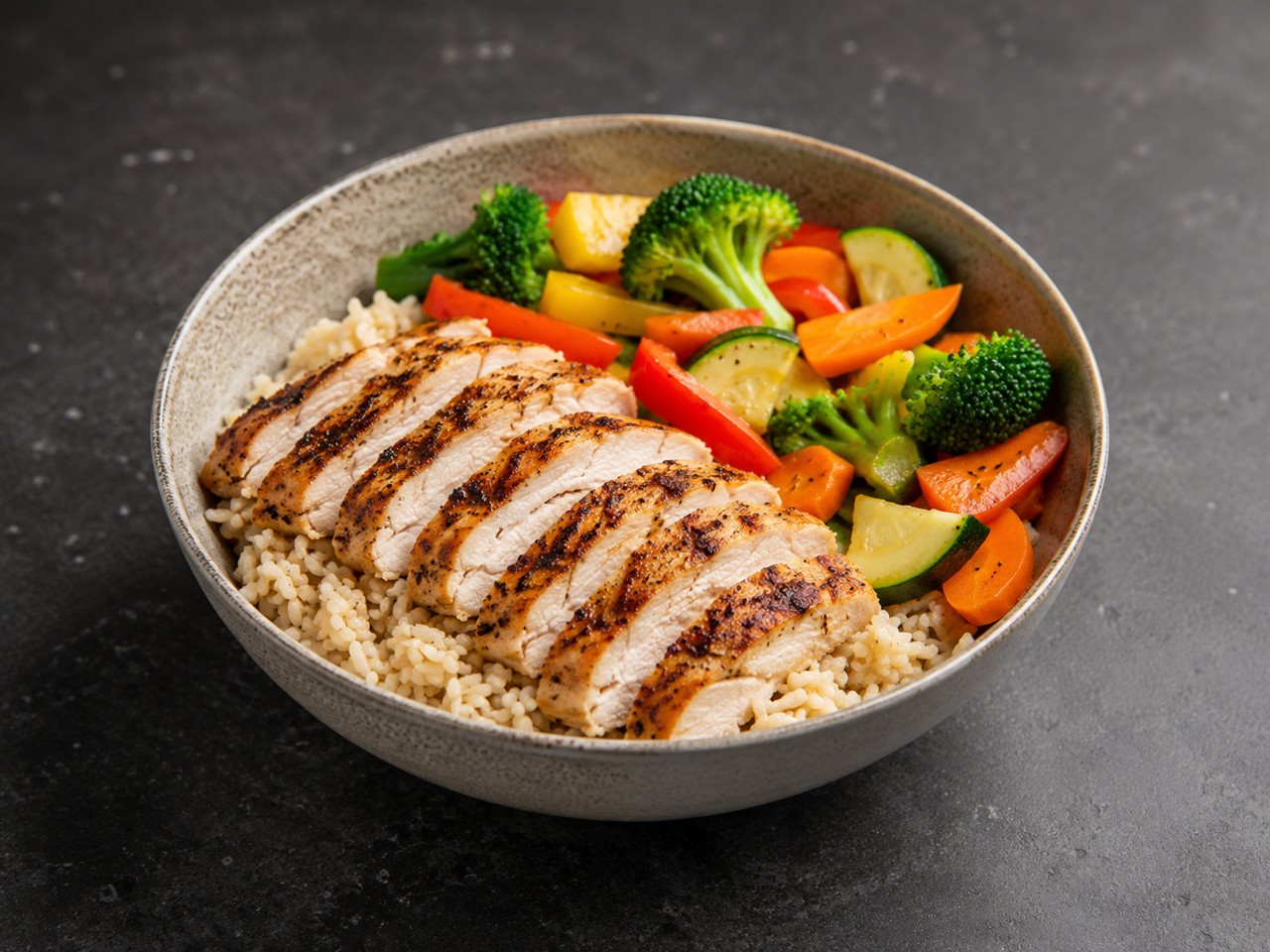
Most meal plans assume four servings, unlimited pantry space and a willingness to eat identical leftovers. A useful plan for one person starts somewhere else: one weekly budget, realistic package sizes, a personal protein target and a deliberate strategy for using the same ingredients in different meals.
Key takeaways
- Plan around complete grocery packages, not fractional ingredient costs.
- Use a small group of flexible proteins, grains and vegetables across several meals.
- Keep the protein target user-defined rather than treating a general target as medical advice.
- Judge the plan by whether it is easy to shop, prepare and repeat next week.
Start with constraints, not recipes
Choose the weekly budget, preferred store, maximum cooking time, available equipment and foods to avoid before selecting meals. Constraints eliminate recipes that look appealing but do not fit the actual week. A plan that requires a blender, oven and three specialty ingredients is not useful to someone with a microwave and fifteen minutes.
Choose flexible protein anchors
Select several protein-rich ingredients that can appear in different formats. Eggs can become toast, wraps or omelets. Greek yogurt can work in breakfast bowls, sauces and snacks. Chicken, tofu, beans, lentils or canned fish can move between bowls, wraps and pasta. Variety should come from preparation and seasoning rather than buying a completely different ingredient set for every meal.
Separate checkout cost from food consumed
A recipe may use one dollar of oats, but the shopper must buy the whole package. Track the estimated checkout total, the value consumed during the week and the value carried into next week. This makes a plan more honest and prevents the common surprise where a low cost-per-serving plan produces a much larger receipt.
Build an intentional preparation sequence
A good plan tells the user what to do first. Cook shared grains, prepare the main proteins, wash vegetables and portion the first few meals. Keep sauces separate and freeze ingredients that will not be used quickly. The objective is not a perfect Sunday meal-prep ritual; it is reducing the number of decisions required during the week.
Create a feedback loop
After each meal, record whether it was enjoyable, affordable and practical. The next week should preserve favorites, remove disliked meals and use remaining ingredients. Retention comes from the plan improving with use, not simply generating another collection of recipes.
Questions people ask
How much protein should one person eat?
SoloFuel does not prescribe a medical target. Users choose a general personal target, and anyone with medical or clinical nutrition needs should consult a qualified professional.
Can a one-person meal plan still include leftovers?
Yes. The distinction is that leftovers should be intentional. A recipe can produce two portions when the second portion has a specific place in the schedule.
Why are checkout totals higher than the sum of meal costs?
Meal costs represent the estimated value consumed. Checkout totals include full packages, some of which remain for the following week.