
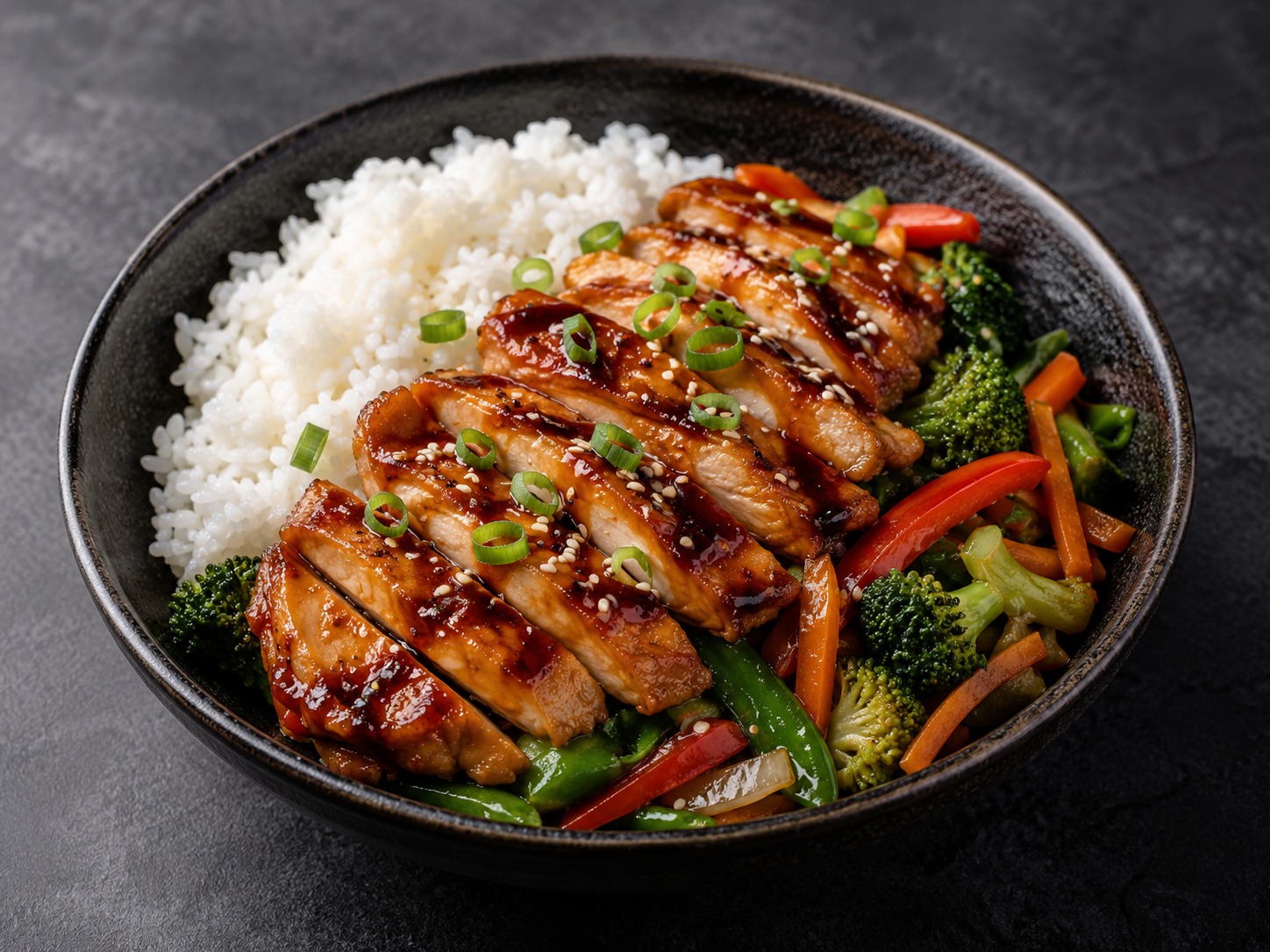
Meal prep for one works best when ingredients are prepared in components rather than turning the entire week into seven identical containers. Cook the shared building blocks once, then assemble them into different breakfasts, bowls, wraps and dinners.
Key takeaways
- Prepare shared components instead of fully assembling every meal.
- Keep sauces and delicate vegetables separate until serving.
- Freeze portions that will not be eaten safely within a few days.
- Schedule a short midweek reset instead of forcing everything into one session.
Prepare the ingredients with the longest lead time
Begin with grains, potatoes, lentils and proteins that require cooking. While those cook, wash and chop vegetables. This sequencing shortens total preparation time and avoids waiting for one task to finish before starting another.
Use component prep for variety
Cooked rice can support a chicken bowl, egg fried rice and a bean bowl. Roasted or sautéed vegetables can work in omelets, wraps and dinners. The same prepared ingredient can create different meals when the sauce, seasoning and assembly change.
Store food by when it will be eaten
Keep the first few days in the refrigerator and freeze later portions when appropriate. Label containers with the meal and day. Follow package instructions and food-safety guidance rather than relying only on a meal planner’s estimate.
Make the plan easy to interrupt
Real weeks change. Include meals that can be moved, frozen or swapped without ruining the grocery plan. A meal-prep system should recover gracefully when a dinner invitation or late workday appears.
Review what remained
At the end of the week, note which packages still contain usable food. Build the next plan around those ingredients before adding new purchases. This is where a one-person planner can become more valuable over time.
Questions people ask
How many days should I prepare at once?
There is no universal answer. Many users benefit from preparing shared components for several days and completing a shorter midweek refresh.
Do I need special containers?
No. Any food-safe containers that fit the portions and storage method can work.
Can meal prep work with vegetarian plans?
Yes. Beans, lentils, tofu, eggs, dairy and grains can be prepared as flexible components depending on the user’s dietary preference.